|
Ethno::log |
|
... Previous page
Inder sind vor 4000 Jahren nach Australien gewandert Australien wurde anscheinend zwischen seiner ersten Besiedelung vor 40.000 Jahren und der Wiederentdeckung durch die Europäer in der Neuzeit vor 4000 Jahren nochmals durch Inder besiedelt. Eine genetische Studie widerlegt die lange gehaltene These von der kulturellen Isolation der Aborigines und klärt damit erneut ein Forschungsfeld, dass die Ethnologie im letzten Jahrhundert lange beschäftigt hat. ORF: Gene verbinden Australien mit Indien PNAS: Genome-wide data substantiate Holocene gene flow from India to Australia (Abstract der Forschung) ... Link (0 comments) ... Comment Dept. of , simba, January 11, 2013 at 2:50:10 AM CET 11.01.13 - Ethnoparty 
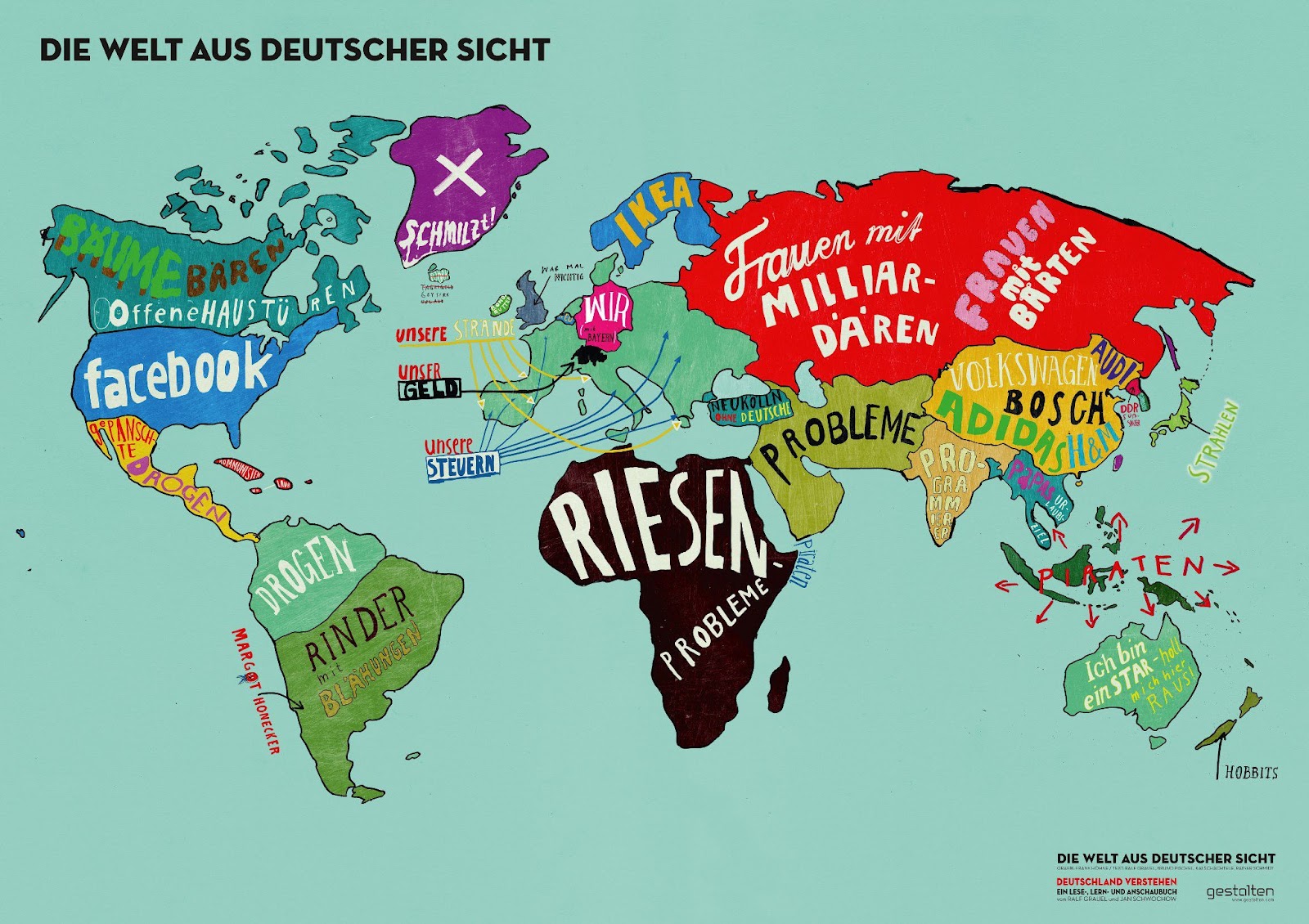
... Link (0 comments) ... Comment Dept. of ethnologica, kerleone, January 7, 2013 at 10:29:49 AM CET "Kultur der Gewalt" gegen Frauen in Indien? Ulrich Demmer im Gespräch mit dem Deutschlandfunk (MP3, 25min). ... Link (0 comments) ... Comment Dept. of events, maysong, December 28, 2012 at 3:35:36 PM CET CfP ASS Extended: Health, Body, and Consumption ASS Extended: Health, Body, and Consumption CALL FOR PAPERS ASS – Anthropology Students’ Sessions was established in October 2010 as weekly self-organized activities ASS Extended: Health, Body, and Consumption, 29th – 30th of March 2013 In our globalized societies there are coexisting different medical systems and other knowledge about health that on one hand compete for their believers and on the other influence each other and due to ongoing syncretism and hybridization we are faced with more and more methods and techniques of taking care for our health and body. This is not only changing the conceptions of health and disease and the perceptions of our bodies but it also influences our daily lifestyles. On every step we hear about “healthy life style” and “healthy body” – and about the ways to achieve them: which physical activities to pursue, what kind of food to eat, and which philosophy to follow. What is often forgotten in this context is that all theories and practices concerning care for our health and body are deeply embedded in economic and political spheres. A believer is at the same time a consumer and the experts’ advices are at the same time marketing. The goal of ASS Extended is to share and confront different critical views on this complex system, to explore it from different angles, to teach and learn about different segments and aspects of it through workshops, paper presentations, films, discussions, or any other form you can think of. All additional information will be sent to you via e-mail and will be available on anthropologystudentssessions.blogspot.com. The Submission You are invited to submit an abstract of your paper or a film that you would like to have screened (it can be your own work but not necessarily); a short description of a round-table or a workshop; or an explanation of any other idea that you have for the activity that would contribute to the knowledge on the topic of Health, Body, and Consumption. The submission should not be longer than 200 words. Please, add the title of and form of your contribution (presentation, workshop, film, etc.), your full name, information about your education (or in which discipline you feel comfortable in), and your e-mail address. The deadline for the submission is 31st of January 2013. Send it to ass.collective10_aet_gmail.com. We will inform you whether you have been selected as soon as possible. There is no participation fee. ASS Extended will be held in [A]Infoshop, part of the autonomous cultural center Metelkova, Ljubljana. There will be a cooked meal provided each day of the conference. However, we regret we cannot assure you an accommodation, but can send you the information about inexpensive options. Anthropology Students’ Sessions Collective ... Link (0 comments) ... Comment Dept. of ethnologica, nainaturtle, November 19, 2012 at 1:20:38 PM CET Die Welt aus deutscher Sicht
... Link (0 comments) ... Comment Dept. of ethnologica, kerleone, November 17, 2012 at 1:30:42 PM CET US-Unis dürfen Bonus für Hautfarbe geben "Ob ein Bewerber schwarz oder weiß ist, durfte bisher an Hochschulen im US-Bundesstaat Michigan keine Rolle spielen. Doch nun entschied ein Gericht: Die Unis dürfen Minderheiten gezielt fördern. Das Urteil ist umstritten, denn das eigene Volk hatte 2006 gegen "Affirmative Action" gestimmt." Spiegel Online: Streit um "Affirmative Action" ... Link (0 comments) ... Comment Dept. of , OCB1, November 16, 2012 at 12:25:24 PM CET Erneute Stellen am Ethnologischen Museum Berlin ... Link (0 comments) ... Comment Dept. of events, aines, October 30, 2012 at 9:23:38 AM CET Afrikanische Filmtage 2012 in MUC JOKKO-Connection proudly presents... AFRIKANISCHE FILMTAGE 2012 im Vortragssaal der Münchner Stadtbibliothek/Gasteig. 02. bis 04.11.2012!!!! Programm: www.mosaik-europa.com Tickets: www.gasteig.de Wir haben auch zwei Gast-Regisseure geladen: Jean-Marie TENO (Kamerun/Freitag) www.jmteno.us Sylvestre AMOUSSOU (Benin/Samstag) Trailer zu Africa Paradis von S. Amoussou ... Link (0 comments) ... Comment Dept. of localica, kerleone, October 25, 2012 at 10:43:40 AM CEST HEUTE 10 Jahre Ethnolog - Wir feiern! Vor zehn Jahren, am 29. Oktober 2002, eröffneten wir, Zephyrin und KerLeone, mit einer Meldung über den Einfluss des Krieges gegen die Indianer Amerikas auf die Hexenverfolgung in Massachusetts dieses Weblog. Seitdem sorgen Ethnologen aus München und anderen Städten regelmäßig für eine Mischung aus ethnologisch relevanten Nachrichten aus Wissenschaft und Journalismus, was wir wirklich toll finden. Das Ethno::Log ist damit das älteste ethnologische Weblog der Welt. Es ist sicher etwas behäbig mit altem Layout und altem Weblog-System, aber so ist das eben bei den alten Tanten. Einen schönen Dank an dieser Stelle auch an den Antville-Verein, der den Server und die Software immer noch pflegt und an Ronsens, der uns dieses Weblog mit der sperrigen Adresse damals in einer Zeit knapper Antville-Ressourcen geschenkt hat. ... Link (5 comments) ... Comment Dept. of events, just be., October 2, 2012 at 11:01:09 PM CEST Kulturwissenschaftliche Technikforschung Oh verdammt, da ist wieder ein Kongress (endlich) und ich werde ihn wieder verpassen müssen :( "Vom 12. bis zum 14. Oktober 2012 veranstaltet das Forschungskolleg Kulturwissenschaftliche Technikforschung, angesiedelt am Institut für Populäre Kulturen der Universität Zürich, den mittlerweile III. Kongress Kulturwissenschaftliche Technikforschung." "Auf dem Kongress soll die Perspektive einer alltagskulturwissenschaftlichen Technikforschung den Ausgangspunkt für den interdisziplinären Austausch bilden. Das heisst es wird vom Menschen ausgehend nach der Verschränkung von Kultur und Technik gefragt. Auf der Basis eines breiten Verständnisses von Technik bzw. von Technischem sollen dabei mögliche Dimensionen kulturwissenschaftlicher Technikforschung ausgelotet werden, indem das Technische von seinen Randbereichen her produktiv befragt wird." Mehr dort auf der Seite. technikforschung.twoday.net scheint wieder etwas aktiver zu sein \o/ ... Link (0 comments) ... Comment Dept. of job opportunities, OCB1, August 30, 2012 at 9:47:03 PM CEST Job! Am Ethnologischen Museum zu Berlin Am Ethnologischen Museum in Berlin ist zum 1.11.2012 eine Stelle als "wissenschaftliche/r Assistent/in (in Fortbildung)" zu vergeben. hv.spk-berlin.de ... Link (0 comments) ... Comment Dept. of Publications, just be., August 20, 2012 at 7:28:57 PM CEST Papier ist Macht Über Forscherkarrieren bestimmen Fachmagazine. Dahinter stehen Großverlage mit Milliardengewinnen. Nun wehren sich die Wissenschaftler. Mehr dazu bei der TAZ: www.taz.de Zeit wirds! Allerhöchste! ... Link (0 comments) ... Comment ... Next page
|
The finest stuff from ethnology social/cultural anthropology and cyberanthropology. Collected with ceaseless endeavour by students and staff of the Institut für Ethnologie in München/Germany and countless others.
... about this website Online for 9112 days Last modified: 11/29/22, 8:56 PM Search
Browse by Category
Status
Youre not logged in ... Login
Menu
Calendar
Recent updates
Schade Oh, so bad! The
oldest anthropology blog is closing :(( It seems the whole...
by iglu01 (1/4/20, 4:05 PM)
-- Closed -- I think
it's time to close the weblog, it's already sleeping since...
by kerleone (12/29/19, 1:54 PM)
Stellenausschreibung des Max-Planck-Instituts für ethnologische
Forschung. Bewerbungsfrist: 15.02.2017 Das Max-Planck-Institut für ethnologische Forschung sucht Doktoranden/Doktorandinnen...
by HatEl (1/31/17, 9:11 AM)
Ethnosymposium in Halle (Saale): Call
for Contribution – 14.-17. Mai 2015 Call for Contribution –...
by normanschraepel (2/9/15, 3:35 PM)
Bruno Latour: Kosmokoloss. Eine Tragikomödie
über das Klima Der Hörspiel Pool von Bayern 2 hat...
by pietzler (11/21/14, 3:23 PM)
Send us suggestions
   |
||||||||||||||||||||||||||||||||||||||||||||||||||||||||